News
AtelierÉticaDigital contributes to national consultation on AI in schools
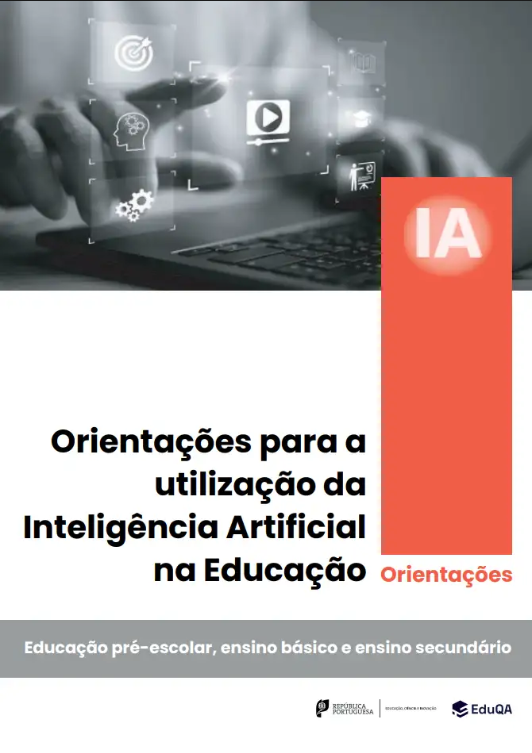
Researcher André Freitas has taken part in the public consultation on the document Artificial Intelligence in Education - Guidelines for the Responsible Use of AI in Educational Settings, drawing on findings from the research project Inclusive Digital Education: Reflective Practices in Digital Ethics, of which he is Principal Investigator. The guidelines were put forward by the Institute of Education, Quality and Assessment (EduQA) and are aimed at pre-school, basic and secondary education. The public consultation opened on 15 October 2026 and ran for 30 days, until 14 November 2026. The final version of the guidelines is due to be sent to schools on 4 January 2027, at the start of the second term, and will apply in state and private schools from that month.
The contributions are based on the project’s findings: a systematic review of the international literature and a national survey of 577 teachers, from primary through to secondary education, across every region of the country. The data show that almost half of teachers (48%) already use artificial intelligence in their teaching. They accept it mainly as a support for pupils’ thinking rather than a substitute for it. The data also reveal significant challenges. Only 6.9% of teachers have received specific training in digital ethics. And although most teachers are equipped, only 42.6% report that pupils have equitable access to devices and the internet, with marked differences between regions. Building on the principle that responsibility for educational decisions must remain human, André Freitas, through the AtelierÉticaDigital project, proposed:
- a national programme of certified continuing professional development for teachers;
- an approach to equity centred on pupils’ actual access, including outside school; the inclusion of social justice and the impact of algorithms in AI literacy;
- recognition of the professional experience and pedagogical judgement that teachers already exercise;
- central support for schools in assessing AI tools;
- an educational and preventive approach to digital citizenship;
- national monitoring mechanisms, developed in partnership between schools and higher education institutions.
This contribution reinforces the AtelierÉticaDigital project’s commitment to returning the knowledge it produces to the educational community and to public policy. In the first weeks of 2027, the project will run three training courses for teachers, accredited by the Portuguese Society of Educational Sciences (SPCE). The Principal Investigator of the AtelierÉticaDigital project can be contacted at
The AtelierÉticaDigital project is based at CeiED and funded by the CeiED Seed Projects programme / Foundation for Science and Technology (FCT) (PE-CEIED-4/002/2024; DOI: ). Further information: project page.