Events
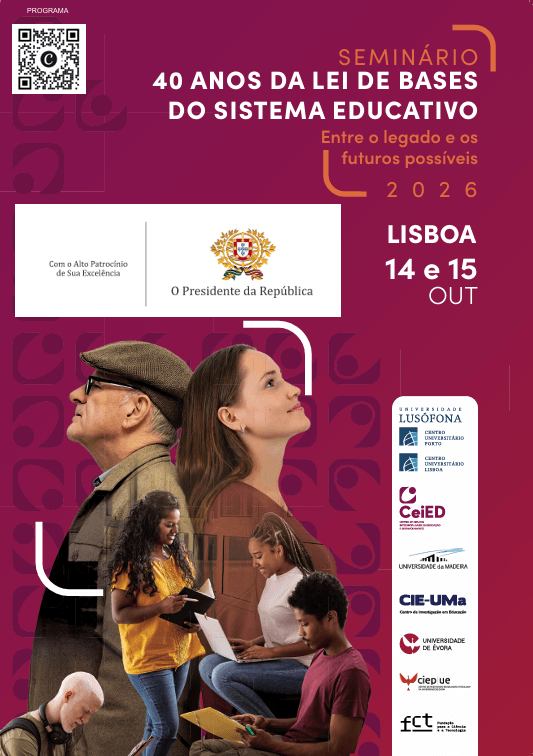
Seminar marking the 40th anniversary of the Basic Law on the Education System discusses demands regarding citizenship education and the role of schools in the face of social polarization
Education, democracy, citizenship: weaving the common good in a polarized world
In a social context marked by growing polarization, citizenship education finds itself at the center of public controversy. The rise of far-right ideologies, the advancement of neoliberal educational reforms, and increasing pressure to depoliticize school curricula are profoundly reshaping how citizenship is taught in various countries, calling into question its very existence within the school environment.
Citizenship education, encompassing democratic values, sex education, environmental issues, human rights, and community engagement, faces a latent threat. In Portugal, for instance, recent proposals to remove citizenship studies from the mandatory curriculum prompted reactions from academic and civil society stakeholders; notably, the Portuguese Sociological Association issued a public manifesto denouncing these measures as a step backward for democratic learning. The role of the school as a space for democratic formation is thus being called into question: should the educational institution yield to a sense of formal neutrality, or should it instead position itself as an active promoter of the values of pluralism, rights, and the common good?
These tensions manifest themselves through political changes and institutional pressures, as well as through local resistance, pedagogical innovation, and critical inquiry. The discussion in Panel I: "Weaving the Common: The Democratic Promise of Education", at the Seminar marking the 40th anniversary of the Basic Law of the Portuguese Educational System, aims to examine these dynamics. At this critical juncture, it is essential to understand whether schools will align with policies of exclusion or succeed in positioning themselves as spaces of democratic renewal, solidarity, and sustainability.