Events
Tales of Oblivion — Difficult Histories, Present Memories
Film screening and conversation with the filmmaker and guests in attendance
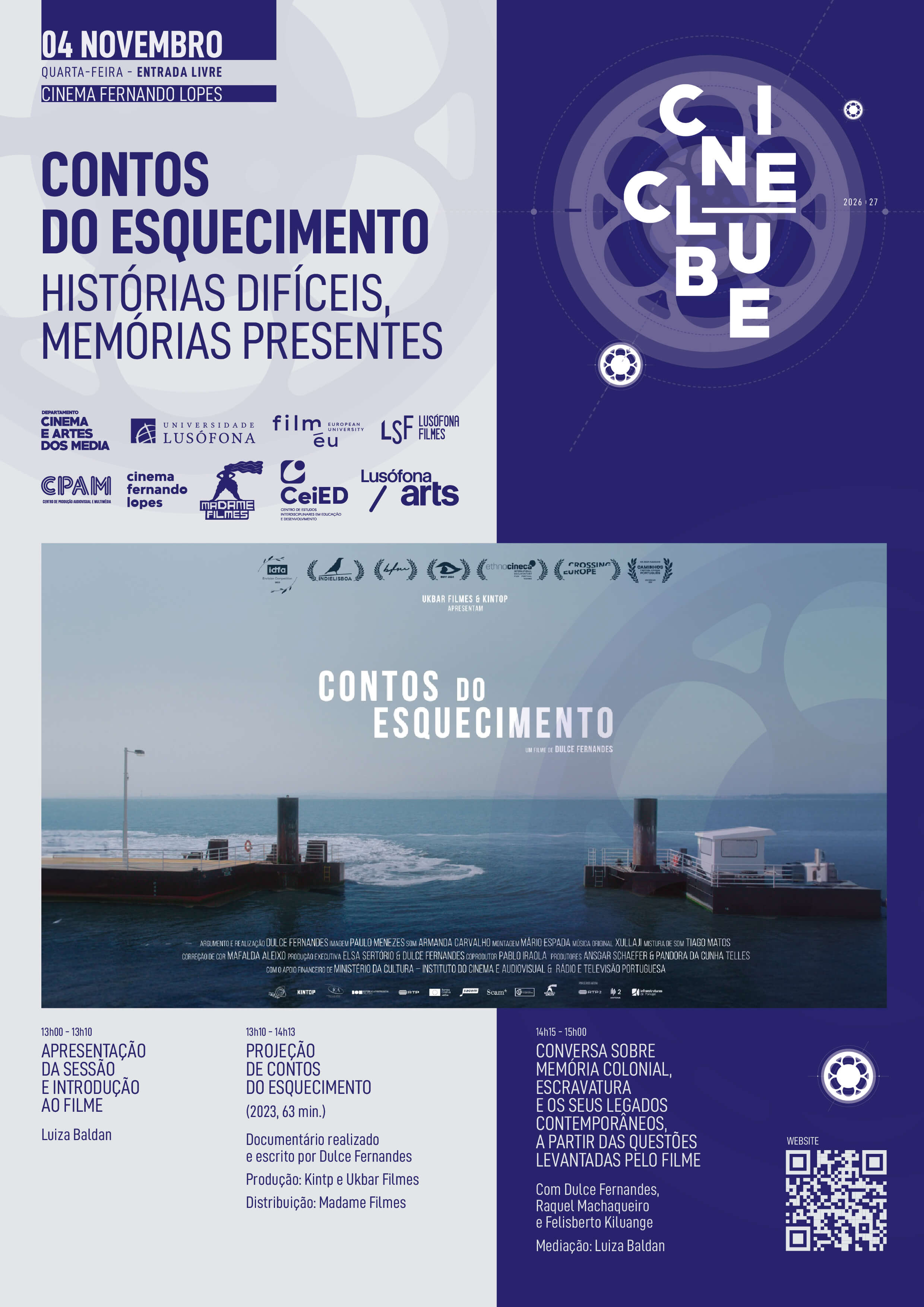
On 4 November 2026, from 1:00 pm to 3:00 pm, Cinema Fernando Lopes will host a free screening of the documentary Tales of Oblivion (Contos do Esquecimento, 2023) by Dulce Fernandes, followed by a conversation with the filmmaker, anthropologist Raquel Machaqueiro, and CeiED/Universidade Lusófona members Felisberto Kiluange and Luiza Baldan, who will moderate the discussion.
Starting from the discovery, in Lagos, of 158 skeletons of enslaved African men, women and children, the film revisits Portugal’s involvement in the transatlantic trafficking of enslaved people and the processes through which colonial memory is constructed, transmitted and erased. The event aims to foster a critical reflection on the relationships between history, memory and colonialism, bringing together perspectives from film, anthropology, education and the visual arts.
The conversation following the screening will address colonial legacies in contemporary societies and the role of artistic practices, research and education in the construction and circulation of historical narratives. The session is aimed at the Universidade Lusófona academic community, in particular students, lecturers and researchers in the fields of film, arts, education, anthropology, history, sociology and cultural studies, as well as artists, cultural professionals and members of the general public interested in these issues.
Dulce Fernandes is a Portuguese filmmaker born in Angola, with training in photography, film, journalism and International Relations. Her work addresses Portugal’s colonial past and the processes through which memory is constructed. Her films include Cartas de Angola (2011) and Tales of Oblivion (2023).
Raquel Machaqueiro is an anthropologist and researcher with a PhD from George Washington University. She is part of the Slave Wrecks Project and conducts research on the Portuguese trafficking of enslaved people, public memory, cultural heritage and the historical legacies of slavery.
Felisberto Kiluange is a PhD candidate in Education at CeiED/Universidade Lusófona. His research interests focus on the Angolan education system, taking colonisation as a starting point, as well as on curriculum, higher education and leadership.
Luiza Baldan, who will moderate the session, is a visual artist, a postdoctoral researcher at PPGAV/UnB and a researcher funded by the Fundação para a Ciência e a Tecnologia (the Portuguese Foundation for Science and Technology, FCT) (2023.08863.CEECIND) at CeiED/Universidade Lusófona, where she is a member of ReLeCo – Socio-Artistic Studies for Decoloniality and Sustainability. Her practice combines photography, text, audio and video in works about places, stories and human relationships.