


News


ROMPANTE Project at the European Researchers’ Night 2026
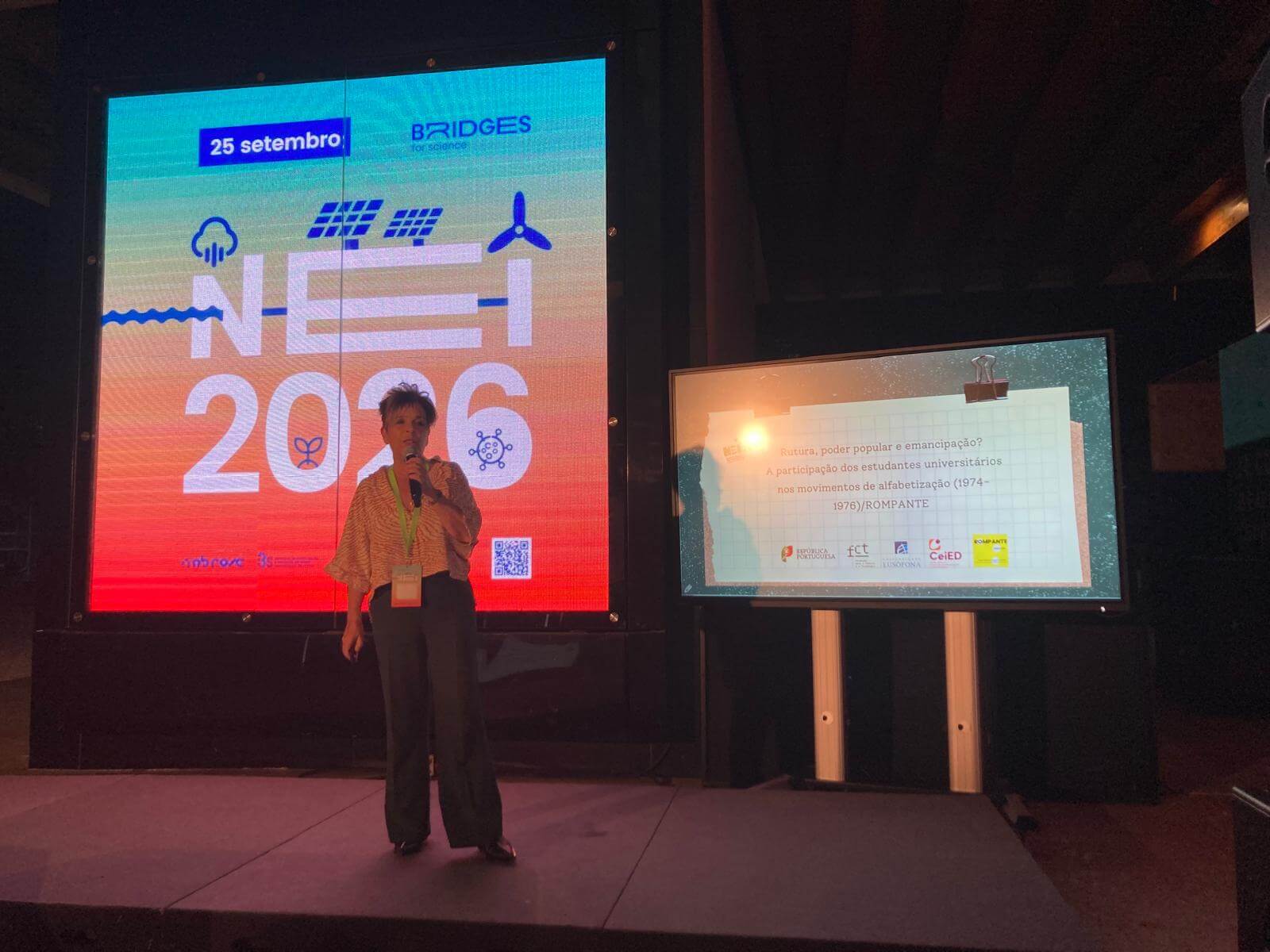
The project Rupture, popular power and emancipation? University students' engagement in the literacy movements (1974-1976) / ROMPANTE (2024.16621.PEX) responded to the challenge issued by the event organisers and took part in the European Researchers’ Night 2026.
The European Researchers’ Night is an initiative promoted by the European Commission as part of the Marie Skłodowska-Curie Actions, held annually on the last Friday of September. Its aim is to give communities a voice and bring researchers and science closer to civil society.
The project was one of five selected to be presented on the “Science in an Instant!” stage. Its stand, located within the framework of the European Mission on “Smart Cities”, provided a space for conversations, answering questions, and engaging visitors in the game “ROMPANTE: Hidden stories of literacy in Portugal”.
It was an opportunity to build “Bridges of Knowledge” between the research team and the visitors who came to the Pavilhão do Conhecimento - Centro Ciência Viva, while continuing the project’s commitment to Open Science: bringing research closer to non-academic audiences and sharing science in a participatory and accessible way.

Inclusive Education in Focus: CeiED Participates in National and International Initiatives
Inclusive Education was at the centre of two initiatives involving researchers and faculty members from Universidade Lusófona, fostering reflection on progress, current challenges and future perspectives in this field.
On 17 September, the International Symposium “Inclusive Education: Seeing and Understanding” took place, with the participation of António Teodoro, Director of CeiED, Luzia Lima-Rodrigues, Director of the Master’s Degree in Special Education, and speakers Inês Alves (Scotland), Liliane Garcez (Brazil) and David Rodrigues (Portugal). Over three hours, the speakers presented different perspectives on Inclusive Education in these contexts, addressing the progress achieved, current challenges and promising pathways for the future, followed by a discussion with participants. The event was accredited as a Short-Term Training Activity by the Continuing Education Centre of the Institute of Education of Universidade Lusófona.
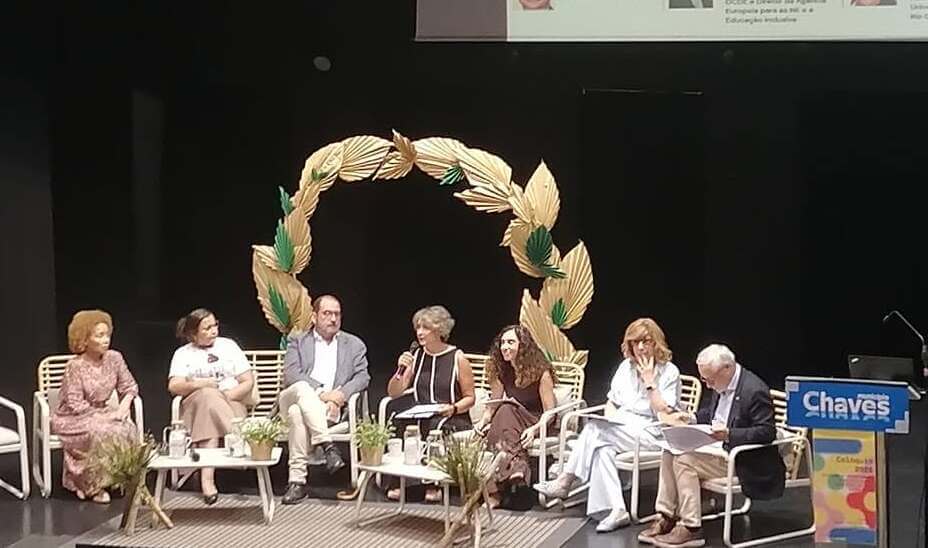
Universidade Lusófona also participated in the 3rd Colloquium “Inclusion and Diversity: Pathways to Quality of Life and Well-Being”, organised by CERCIChaves, where Luzia Lima-Rodrigues moderated the roundtable “Convention on the Rights of Persons with Disabilities: Implementation, Monitoring and Challenges at the Global Level”.
The session brought together experts from different countries and institutions, including João Costa, Director of the European Agency for Special Needs and Inclusive Education; Filomena Pereira, UNICEF International Consultant for Inclusive Education; David Rodrigues, Invited Full Professor at Universidade Lusófona and member of the National Education Council; Sara Neto, Executive Secretary of the National Monitoring Mechanism for the Convention on the Rights of Persons with Disabilities; Maria da Luz Mussuali, from CERCI Coração Azul, Angola; and Flávia Roldan Viana, from the Federal University of Rio Grande do Norte, Brazil.
These initiatives reinforce the commitment of Universidade Lusófona and CeiED to research, education and critical reflection on Inclusive Education, fostering dialogue across different contexts and contributing to more equitable and inclusive education.

Lusophone Journal of Education, No. 71 (2026)
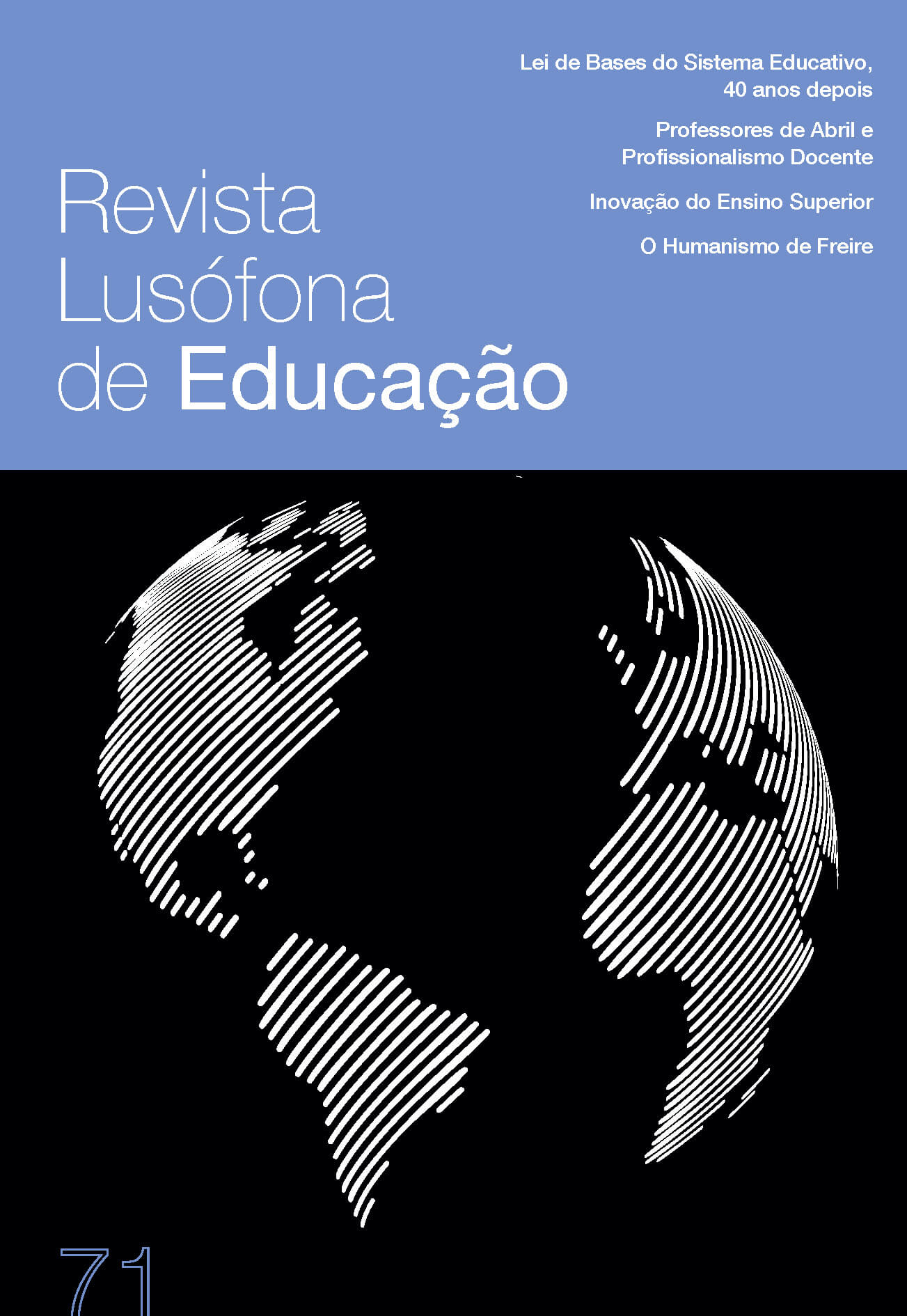
Issue 71 marks the 40th anniversary of the Basic Law of the Education System (Law No. 46/86), seeking to question its legacy rather than simply celebrate it.
The issue brings together eight articles, an interview, an essay, a critical review and, as a new feature, the “Memorial” section, dedicated to testimonial texts that preserve and critically engage with the memory of the history of education.
The texts do not always address the Basic Law of the Education System directly, but they engage with its principles and limitations. The stated aim is to raise questions rather than provide definitive answers.
Vol. 71 N.º 71 (2026): REVISTA LUSÓFONA DE EDUCAÇÃO | Revista Lusófona de Educação
CeiED attends AEBBVA meeting on Positive Communication, Conflict Prevention, and School-Family Mediation
On September 10, 2026, CeiED —the Center for Interdisciplinary Studies in Education and Development, through CRIS—was represented at the conference “Positive Communication, Conflict Prevention, and School-Family Mediation,” held at the Barreiro School of Technology and organized as part of the activities of the Baixa da Banheira Vale da Amoreira School Group (AEBBVA).
Sónia Cardoso participates in the 2026 CHER Annual Conference
CeiED researcher Sónia Cardoso participated in the 2026 CHER Annual Conference, held at the Department of Economics and Business of the University of Catania, Italy, from 31 August to 2 September 2026.
Teresa Teixeira Lopo co-coordinates the Knowledge, Science and Expertise Section of the ECPR General Conference 2026
CeiED researcher Teresa Teixeira Lopo co-coordinated, together with Niklas Andersen from Aalborg University, the Knowledge, Science and Expertise Section of the European Consortium for Political Research (ECPR) General Conference, held at Jagiellonian University in Kraków from 8 to 12 September.