


News


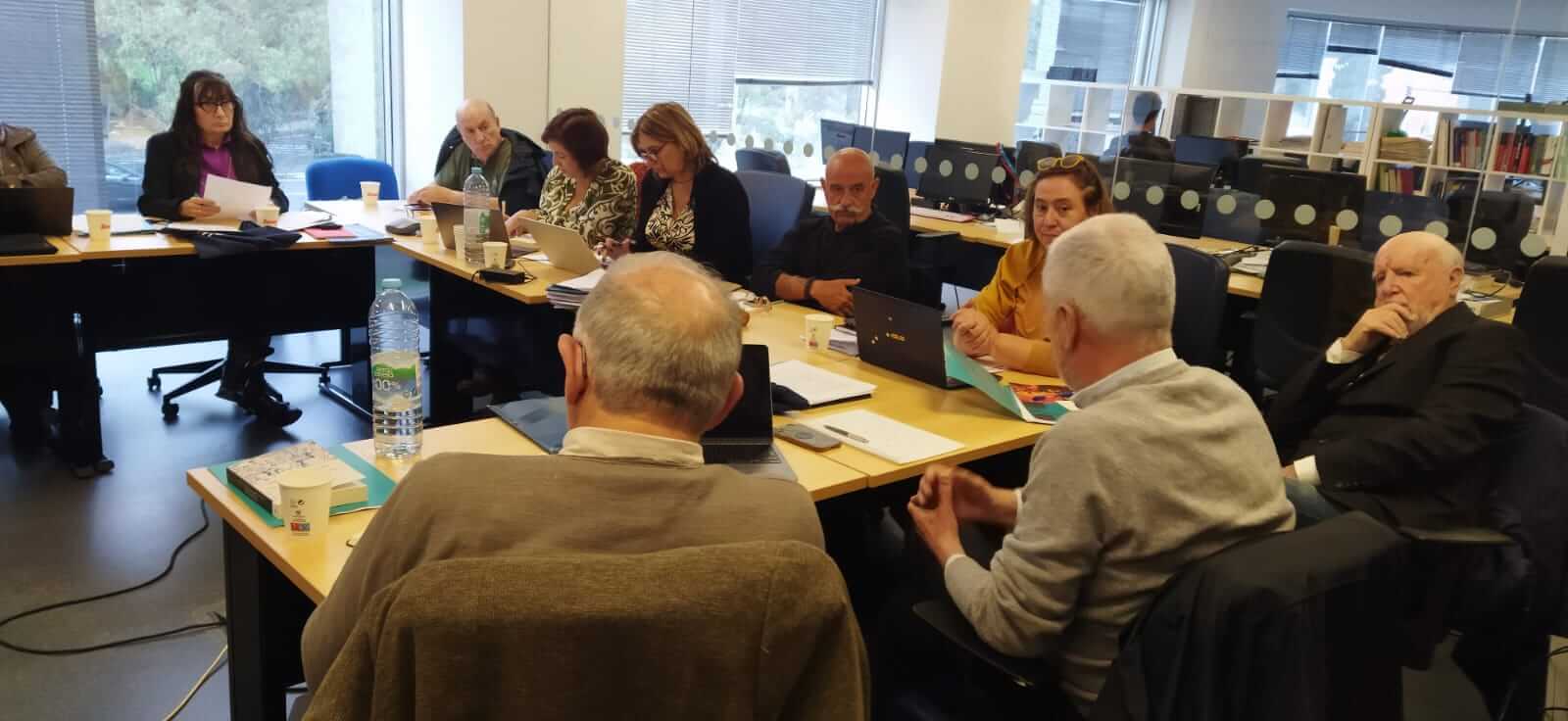
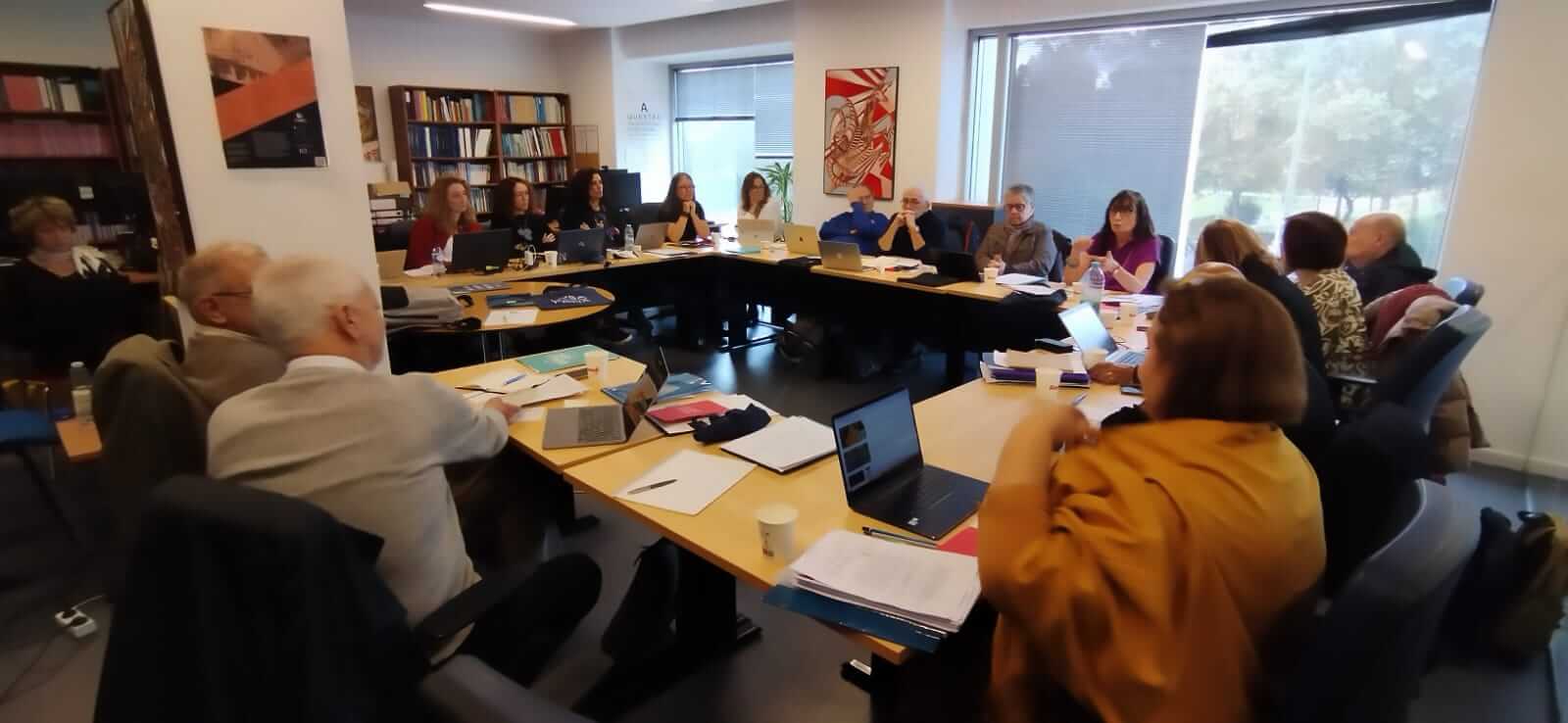
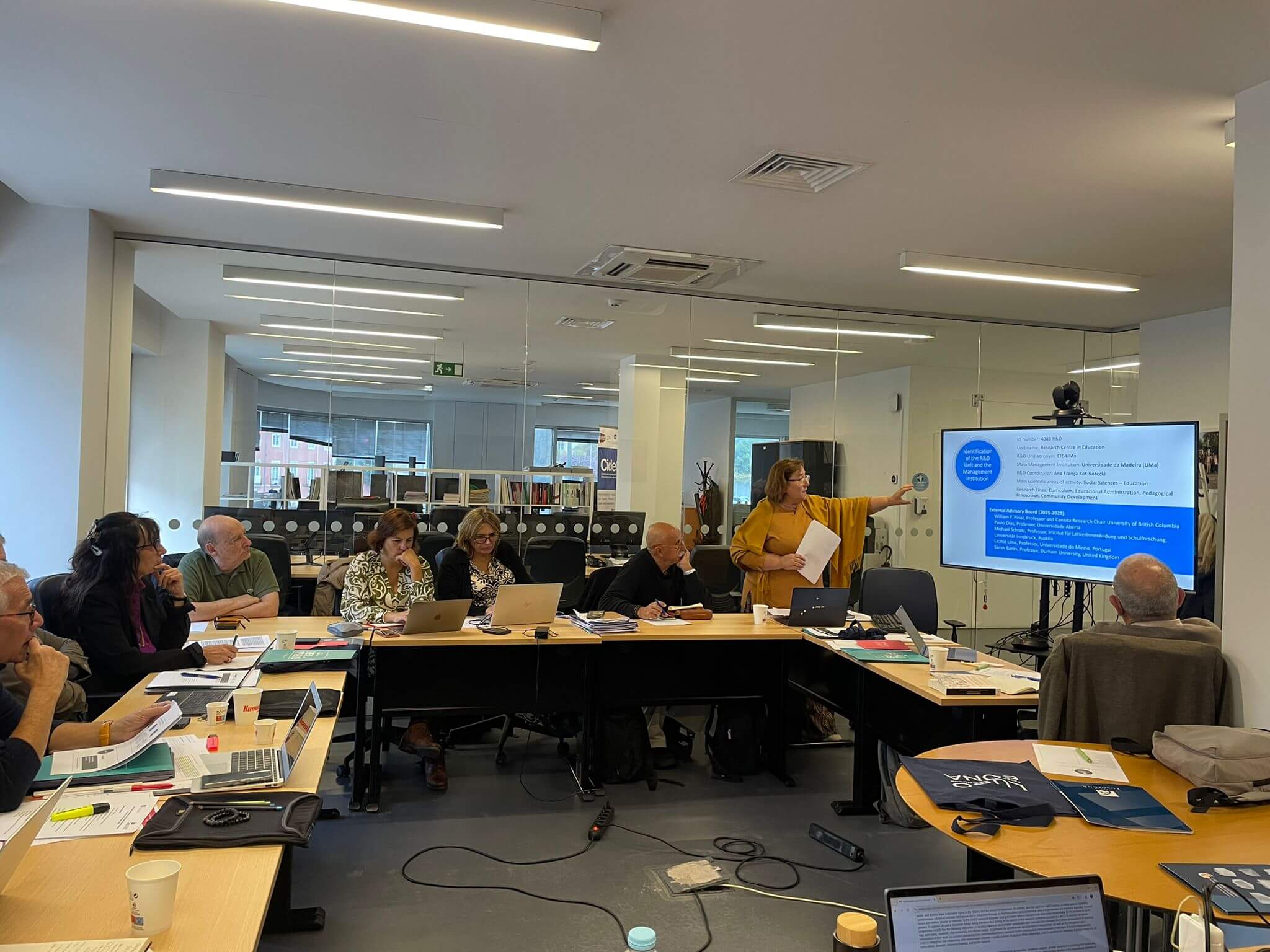
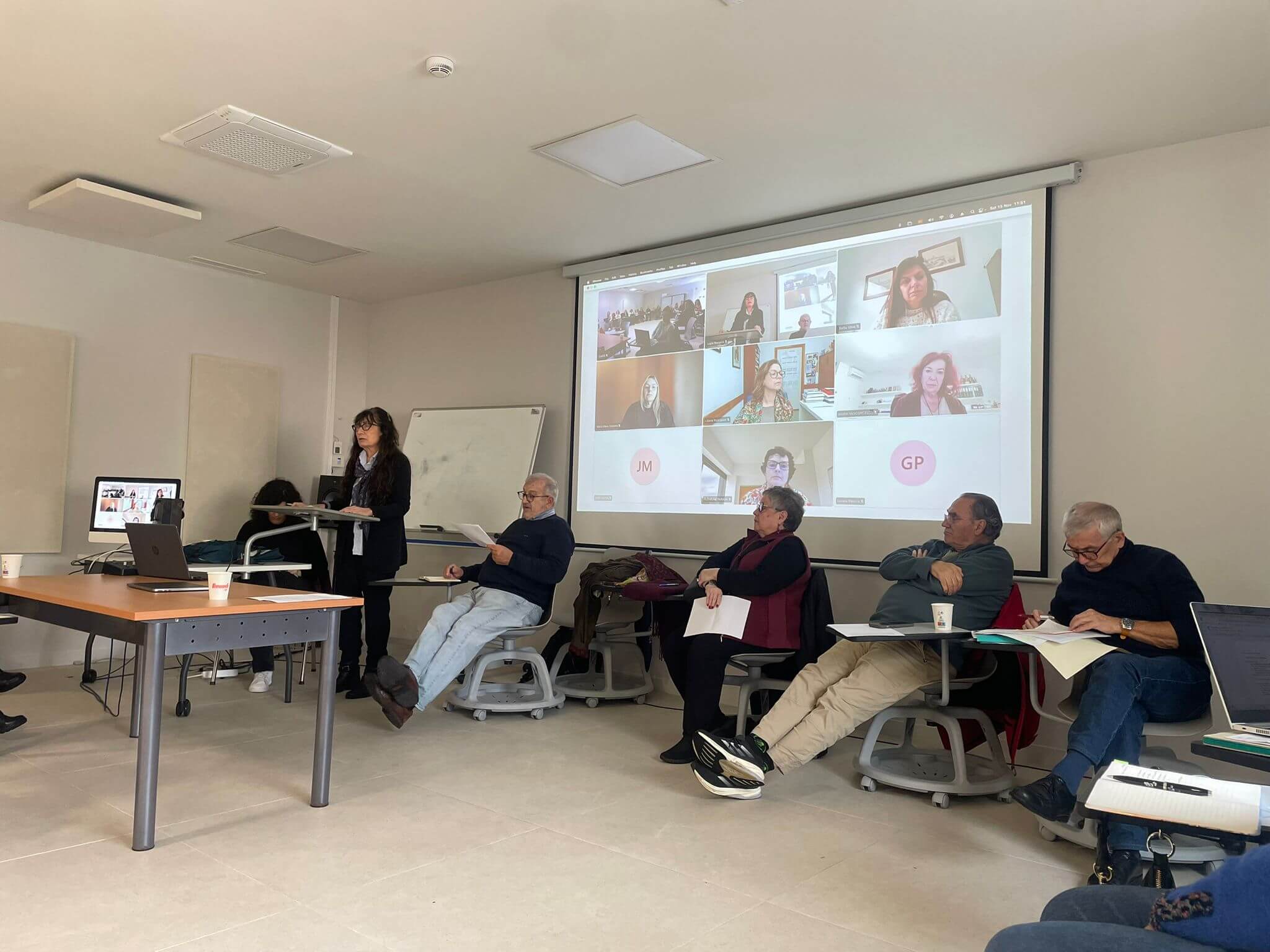
CeiED meets with External Scientific Advisory Board
The Interdisciplinary Research Centre for Education and Development (CeiED) held an extended meeting with its External Scientific Advisory Board (EAB) on 14 and 15 November 2025, dedicated to strategic reflection on the centre’s future within the new 2025–2030 cycle.
Throughout the first day, the CeiED team and the EAB examined the FCT evaluation report, identifying recommendations to strengthen scientific excellence, internationalisation, and the social impact of the research developed by the centre. The 2025–2030 Strategic Plan was also discussed, including the proposal for a shared centre with the CIE at the University of Madeira, academic and research career policies, and conditions for integrating new researchers, in line with CeiED’s vision as an interdisciplinary and socially committed “knowledge ecosystem”.
The afternoon of 14 October was devoted to the training of early-career researchers, to links with doctoral programmes and teaching, and to the role of policy analysis and knowledge translation through observatories, laboratories, and public science initiatives. Scientific agenda priorities in an increasingly polarised context were also debated, aligned with the strategic domains defined in CeiED’s 2025 Position Paper, namely education and learning societies, inclusion and diversity, digital cultures and human‑centred AI, and sustainability, heritage, and territorial development.
Later that day, the meeting addressed the renewal of CeiED’s leadership, asking the EAB for recommendations on governance models, transition processes, and the participation of early‑career researchers in decision‑making bodies. These discussions were closely linked to the need to diversify funding sources, implement green and gender‑sensitive policies, and promote the well‑being of the centre’s scientific community, as proposed in the Position Paper.
On the second day, the External Advisory Board met internally to consolidate a report with strategic recommendations on CeiED’s mission, internationalisation, open science, impact on public policies, and governance. The document was later presented and discussed in a plenary session with CeiED’s Scientific Council, helping to align the long‑term vision with concrete guidelines for the 2025–2030 period.
CeiED’s External Scientific Advisory Board is composed of André Robert, António Sampaio da Nóvoa, Carlos Alberto Torres, Maria Cristina Bruno, Montserrat Pallarès Barberà, and Xavier Rambla, who was unable to attend this meeting. The session with the EAB also included Professor Ivor Goodson, recently awarded an Honorary Doctorate by Lusófona University.


Mário Antas elected to the board of ICOM Europe
Mário Antas, integrated researcher at CeiED, has been re-elected to the Directory Board (2025–2028) of ICOM Europe, following the voting process carried out among all ICOM members during the General Assembly held in Dubai, United Arab Emirates, as part of the 27th ICOM General Conference.
ICOM (International Council of Museums), founded in 1946, is the global organization for museums and museum professionals. It currently represents museum professionals and museological institutions from 37 countries — not all geographically located on the European continent — encompassing around 50,000 professionals and 15,000 museums. This diversity is, in itself, a singular strength, enabling ICOM Europe to function as a vital platform for international cooperation and the strategic development of contemporary museums.
In his role as a member of the ICOM Europe Board, Mário Antas, supported by ICOM Portugal, will represent museum professionals in Portugal during the 2025–2028 term. As a faculty member of the Department of Museology at Universidade Lusófona and a researcher at CeiED, Mário aims to strengthen the connection between museology and education, promoting a vision that recognizes museums as essential spaces for lifelong learning, civic engagement, and social development. This alignment between academic research, museological practice, and cultural policies will continue to guide his contribution to ICOM Europe.
For the 2025–2028 triennium, the Presidency will be held by Juliette Raoul-Duval (France). The Board will include Mário Antas (Portugal), Alexandre Chevalier (Belgium), Felicia Sternfeld (Germany), Lana Karia (Georgia), Teti Hadjinicoalau (Greece), Michele Lanzinger (Italy), and Zsolt Sári (Hungary).

Researcher Marcelo Murta, member of the jury for the ICOM 2025-Dubai Award
Researcher Marcelo Murta, professor in the Department of Museology and researcher at ReLeCo 2 - Memory, Citizenship, and Sociomuseology, was part of the international panel that evaluated the projects submitted to the ICOM 2025 Award, based on the five key dimensions of the 2030 Agenda and the Sustainable Development Goals (SDGs), known as the 5 Ps: People, Planet, Prosperity, Peace, and Partnerships.
Seven expert jury members conducted the selection process, including four museum professionals and two sustainability experts, under the chairmanship of the President of the International Committee for Sustainable Development (ICOM SUSTAIN).
The winner of the ICOM Award was announced at the ICOM General Conference in November 2025.

Lusófona University awards the title of Doctor Honoris Causa to Professor Ivor Goodson
On 13 November, Lusófona University awarded the title of Doctor Honoris Causa to the renowned academic Professor Ivor Goodson, in a ceremony marked by the celebration of knowledge and pedagogy.
The event brought together members of the academic community, researchers, students, and institutional guests in a full auditorium to honour one of the most influential thinkers in contemporary education.
Representing FCSEA and the Institute of Education, the Director of CeiED, António Teodoro, presented the justification for the proposal to award the title, highlighting Ivor Goodson’s pioneering contribution to curriculum studies, teachers’ professional narratives, and the transformation of educational institutions.
The commendation to the new Doctor was delivered by CeiED researcher Elsa Estrela, who emphasised the depth, coherence, and international relevance of the honouree’s body of work, as well as his ability to inspire generations of researchers.
The highlight of the ceremony was the formal awarding of the title by the Rector, followed by the address of thanks by Professor Ivor Goodson, who reflected on the importance of cultivating joy in workplaces and, in particular, in educational settings.
The session closed with a second musical moment, celebrating a memorable day for Lusófona University and for all those who recognise education as a driving force for human and social development.
With this distinction, Lusófona University reaffirms its commitment to promoting scientific excellence and to recognising individuals who contribute significantly to the advancement of education on a global scale.


PhD Student in Sociomuseology Participates in the IX Iberian Forum of Museological Studies in Madrid
Paula Fiúza, a PhD student in Sociomuseology, took part in the IX Iberian Forum of Museological Studies, held in Alcalá de Henares, Madrid (Spain), last September.

PhD Student in Sociomuseology Presents at International Colloquium on Literary Journalism in France
The researcher in training, Paula Fiúza, a PhD student in Sociomuseology, participated in the International Colloquium “Investigative Literature and Literary Journalism: Towards a New Paradigm of Evidence?”, held on October 8 and 9, 2025, in France.